These Waterfalls in Europe Will Take Your Breath Away
Europe is packed with waterfalls that feel unreal. From roaring cliff drops to misty forest cascades, these spots are guaranteed to make you gasp, snap photos, and plan “one more stop.”
Quick Overview
- Plan around seasons for the fullest flow and best viewpoints.
- Most waterfall magic comes from short walks to overlooks.
- Bring layers, waterproof shoes, and a flexible itinerary.
Why European Waterfalls Feel Like Movie Scenes
Waterfalls are instant mood boosters. One minute you’re walking along a path, and the next minute you’re inside a cloud of mist. Then you realize the roar isn’t background noise—it’s the main event.
European waterfalls also have variety. You can find glacier-fed powerhouses in the Alps. You can wander behind curtains of water in hidden gorges. And you can chase smaller cascades in quiet valleys that feel untouched.
Of course, the best experience is more than “seeing” a waterfall. It’s watching the angle of light change across the falls. It’s hearing echoes bounce off stone. And it’s smelling that cool, fresh air that only water can create.
Waterfalls in Europe That Will Take Your Breath Away
Ready for a whistle-stop tour of wonder? Below are standout waterfalls across Europe. Each one includes practical tips, viewpoint ideas, and the vibe you can expect on-site.
1) Plitvice Waterfalls, Croatia (Plitvice Lakes National Park)
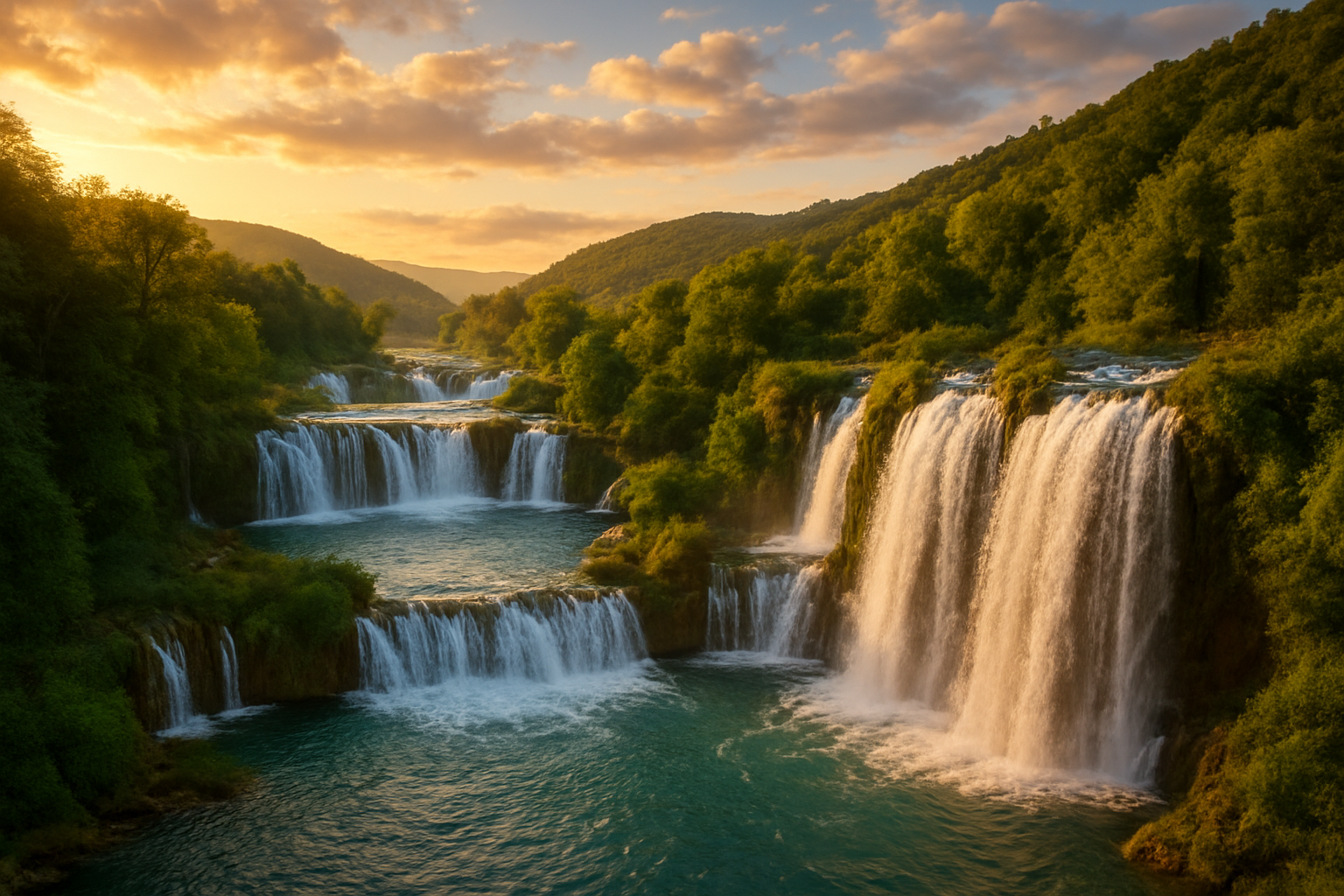
Let’s start with a classic because it earns its reputation. Plitvice Waterfalls combine turquoise lakes, limestone steps, and dramatic cascades. As a result, your photos look colorful and dreamy even on cloudy days.
Most visitors choose the boardwalk and walkway routes. However, there’s real magic in picking an earlier start. Crowds thin out, and the water looks extra glassy at sunrise.
- Best for: Big “wow” scenery, easy-to-follow trails
- Viewpoint tip: Follow signs toward the upper lakes for broader overlooks
- Season feel: Spring and autumn for balance of flow and crowds
2) Staubbach Falls, Lauterbrunnen, Switzerland
If you want a waterfall that looks like it fell straight from a fairytale, this is it. Staubbach drops down a steep cliff beside Lauterbrunnen Valley. Meanwhile, the surrounding mountains make it feel even taller.
The best views come from short paths and viewpoint platforms. Then you can hear the constant rush even before you fully see it. That sound alone is worth the trip.
- Best for: Alpine valley drama and postcard scenery
- Viewpoint tip: Walk toward the viewpoints near the valley paths for wide views
- Season feel: Winter adds ice sparkle; summer offers lush greenery
3) Krimml Waterfalls, Austria (Krimmler Achental)
Krimml Waterfalls are proof that “big” can still feel intimate. These cascades flow through a dramatic mountain landscape. Additionally, you can choose short walks that lead to progressively closer views.
Because the falls span multiple levels, your perspective keeps changing. So you don’t get one photo and done. Instead, you get a whole sequence of scenes.
- Best for: Layered waterfalls and layered viewpoints
- Viewpoint tip: Go up the trail for closer mist and stronger sound
- Season feel: Peak flow in late spring and summer
4) Niagara Falls? Not here—go for Rhine Falls, Switzerland
Europe’s largest falls are waiting near Schaffhausen. Rhine Falls are powerful, wide, and relentlessly impressive. Even if you’ve seen waterfalls before, the scale here hits differently.
One reason this stop is loved is the “different angle” effect. You can view from riverbanks, and you can also access platforms near the water. Therefore, you get variety without needing an intense hike.
- Best for: Big roar and accessible sightseeing
- Viewpoint tip: Spend time comparing both riverbank perspectives
- Season feel: Summer for easy walkways; early autumn for comfortable temps
5) Pliva Waterfalls, Bosnia and Herzegovina
Not every waterfall needs to be famous to be breathtaking. Pliva Waterfalls sit in a natural park-like setting and offer a calmer, greener mood. As a result, the experience feels soothing rather than overwhelming.
Here, the best moments come from walking slow. Watch how water moves around rock textures and forest edges. Then pause often and let your senses catch up.
- Best for: Quiet nature vibes and photogenic scenery
- Viewpoint tip: Look for viewpoints along the river for layered cascades
- Season feel: Late spring and early summer for lushness
6) Dettifoss, Iceland (Vatnajökull National Park)
Dettifoss is the kind of waterfall that makes you feel small. It’s loud, wide, and untamed. Also, the surrounding landscape looks like another planet.
However, you’ll want to dress for the elements. Wind and mist can surprise you, even on clear days. Still, the payoff is huge—this is raw power, not gentle beauty.
- Best for: Dramatic, otherworldly landscapes
- Viewpoint tip: Choose designated overlooks for safe, clear sightlines
- Season feel: Summer for longer daylight; winter for intense atmosphere
7) Kjosfossen, Norway (Geirangerfjord area)
Norway’s waterfalls are famous for their energy. Kjosfossen is no exception, and it drops into a fjord-like landscape. Then you get that extra dimension: water plus steep cliffs plus ocean air.
In many travel itineraries, the fjord itself becomes the “main attraction.” So it’s a bonus when the waterfall show appears during your cruise or road stop.
- Best for: Fjord panoramas with vertical water drama
- Viewpoint tip: Time it for clear skies if possible
- Season feel: Late spring and summer for vibrant green
8) Cascata delle Marmore, Italy (Terni)
Italy gives waterfalls a historical, storybook flair. Cascata delle Marmore is known for its massive engineered flow over a classic landscape. That blend of nature and human design feels uniquely Italian.
Additionally, the viewpoints can offer long sightlines. You can watch the water travel down the rock face and echo in the valley.
- Best for: Unique waterfall experience and scenic walkways
- Viewpoint tip: Look for elevated terraces for long-range views
- Season feel: Spring and autumn for comfortable weather
9) Møllafoss and Steinsdalsfossen area, Norway (South Coast region)
Sometimes the best waterfalls are found along road routes, not just remote treks. In parts of southern Norway, cascades appear near scenic stops. Then you can pair them with coastal walks and nearby viewpoints.
Bring patience and curiosity. You might park, walk for five minutes, and discover a waterfall you didn’t plan for. That’s how Norway keeps stealing hearts.
- Best for: Road trips and quick, satisfying stops
- Viewpoint tip: Check safe pull-offs and marked paths
- Season feel: Autumn for golden light; summer for long walks
10) Krka Waterfalls, Croatia (Krka National Park)
Krka Waterfalls are famous for their accessibility and for the chance to feel close to the water. You can enjoy boardwalk routes, viewpoints, and often a swim-friendly atmosphere in certain areas.
Compared to Plitvice, Krka feels more open and valley-like. As a result, it’s a great pick if you want waterfall beauty without intense navigation.
- Best for: Easy sightseeing and family-friendly routes
- Viewpoint tip: Look for bridges and terraces for wide angles
- Season feel: Summer for swimming; spring for quieter trails
Best Viewpoints: How to See More Than One Side of a Waterfall
Here’s the secret travel bloggers love: one waterfall looks different from different locations. Therefore, try to plan at least two viewing angles for each stop.
Even short routes can offer big payoff. For example, you might start at a main overlook, then continue to a second platform. By doing that, you catch new angles, new textures, and shifting light.
Viewpoint strategies that work almost everywhere
- Start early: Softer light and fewer crowds make everything prettier.
- Climb a little: Even mild elevation helps you see the full drop.
- Watch the weather: Misty conditions can create dramatic atmospheres.
- Bring a lens cloth: Water spray is real, especially near the best viewing spots.
How It Works / Steps
- Pick your season first. Then choose waterfalls that match that flow level.
- Choose the route. Look for boardwalks or marked trails with clear viewpoints.
- Arrive before peak hours. Early visits improve photos and comfort.
- Use a two-stop viewing plan. Spend time at an overlook, then move to a closer platform.
- Adjust for mist and wind. Keep layers handy and protect your camera.
Examples: Build a Waterfall Day Itinerary
Want a quick template? Here are a few easy ways to build a waterfall route without rushing.
Example 1: The “Easy Access” day
Start with Rhine Falls for big views. Then drive to nearby viewpoints for a second angle. Finally, end with a calm nature walk and a long lunch nearby.
Example 2: The “Trail Sequence” day
Pick Krimml Waterfalls for layered scenery. Next, follow the trail sections that bring you closer. Then wrap up with a viewpoint back toward the main cascades.
Example 3: The “Fjord + Waterfall” day
Choose a fjord region such as Geirangerfjord. Add Kjosfossen for vertical drama. After that, explore a short coastal walk so your day doesn’t feel one-note.
If you also love scenic overlooks, you’ll likely enjoy 10 Secret Viewpoints in Europe Only Locals Know About. It pairs beautifully with waterfall routes, especially on road trips.
FAQs
What’s the best time of year to visit European waterfalls?
Late spring through early autumn is usually ideal. Water levels tend to be strong, and trails are more accessible. However, winter can be magical for frozen edges and icy textures.
Do I need hiking boots for waterfall viewpoints?
Not always, but it helps. Many paths can become slippery from spray. Waterproof shoes or grippy footwear make walking feel safer and more comfortable.
Are waterfalls crowded?
Some are, especially in summer. The trick is arriving early and choosing less central routes. Also, consider visiting during shoulder seasons for a calmer atmosphere.
Can I photograph waterfalls without expensive gear?
Absolutely. A smartphone works well in misty conditions. For extra creativity, try using your phone’s portrait or night modes during low light.
How long should I spend at each waterfall?
Plan at least 45 minutes, even for the “quick” stops. Then add more time if there are multiple viewpoints or walking routes. Waterfalls reward patience.
Key Takeaways
- European waterfalls shine with the right angle, not just the right location.
- Early arrivals and shoulder seasons often deliver the best experience.
- Bring layers and non-slip footwear for misty, slippery conditions.
- Choose two viewpoints per waterfall for a richer story.
Conclusion
These waterfalls in Europe aren’t just attractions. They’re experiences that reset your senses and leave you smiling long after the trip. Whether you chase turquoise cascades in Croatia or power and mist in Iceland, the feeling is the same.
So pack your curiosity, plan your viewpoints, and let the roar guide you. Next stop: a waterfall that makes you say, “Okay… wow.”
And if you’re in the mood for more dramatic nature moments, check out 10 Waterfalls in Europe That Look Absolutely Unreal for even more “how is this real?” scenery.